Professionals7 min read
Iced tea supplier in French-speaking Switzerland: what HoReCa needs
Restaurants, hotels and bars in French-speaking Switzerland need reliable artisan iced tea suppliers. What Vitalay offers: case formats, cold-chain logistics, minimum orders and the current range.
By Ciprian
A restaurateur looking to put Swiss artisan iced tea on the menu is not just looking for a drink, but a supplier. The distinction matters. A drink is tasted. A supplier relationship needs managing: minimum orders, cold-chain logistics, reliable deliveries, product availability and a quick response when a batch is missing.
This article is for purchasing managers, restaurant directors and F&B managers assessing Vitalay’s offer for their establishment.
What HoReCa expects from a non-alcoholic drinks supplier
The hotel, restaurant and café sector (HoReCa) has different expectations of artisan drinks from B2C customers. An individual ordering on vitalay.ch is interested in the product’s story. A restaurant director is focused on operations.
Consistency. The establishment needs to order the same product for several weeks running, without unexpected stock shortages or changes in quality between batches. An artisan product may not be 100% identical from batch to batch: that is accepted, but variations must stay within reasonable limits.
Cold-chain logistics. HPP drinks like ours need a cold chain from the workshop to the establishment’s cellar. This means delivery in a refrigerated vehicle or insulated packaging, and immediate transfer to a cold room on receipt. It is not a major obstacle for a restaurant that already manages chilled deliveries, simply a point to confirm.
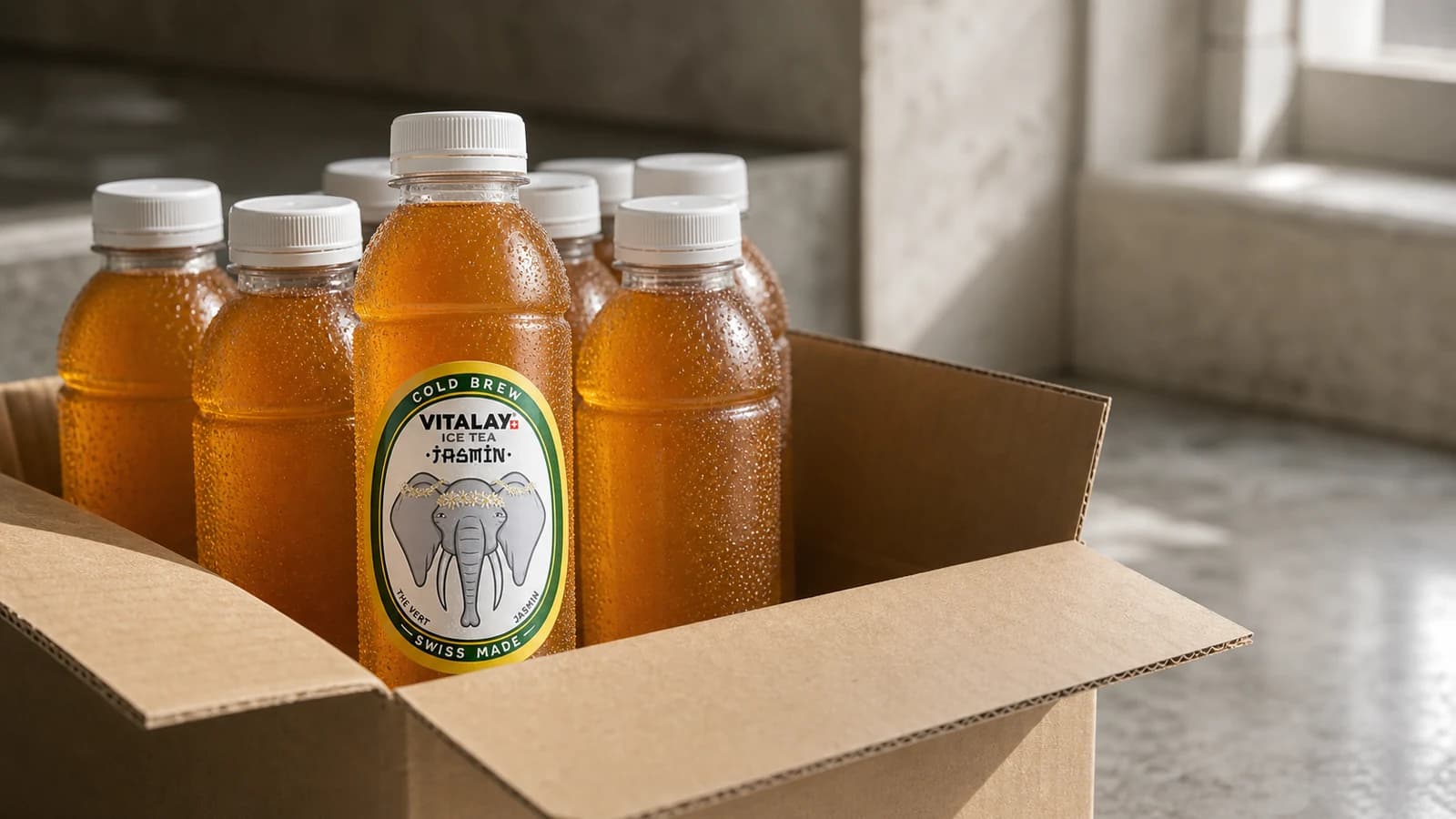
A reasonable minimum order. One case of 16 bottles per product is Vitalay’s minimum. For a restaurant serving 40 covers in the evening and selling 2-3 bottles per service, that is roughly a week’s stock, without overcommitting.
Documentation. Technical sheets, nutritional values, allergens, typical use-by periods: establishments have traceability obligations and often undergo quality audits. A supplier unable to provide these documents creates an operational obstacle.
A direct contact. No call centre, no multi-brand distribution sales representative. An artisan supplier generally offers direct contact with production.
The Vitalay range for HoReCa
Four iced tea and lemonade products, plus a partner range of juices and shots. Here is how they fit into a food service setting.
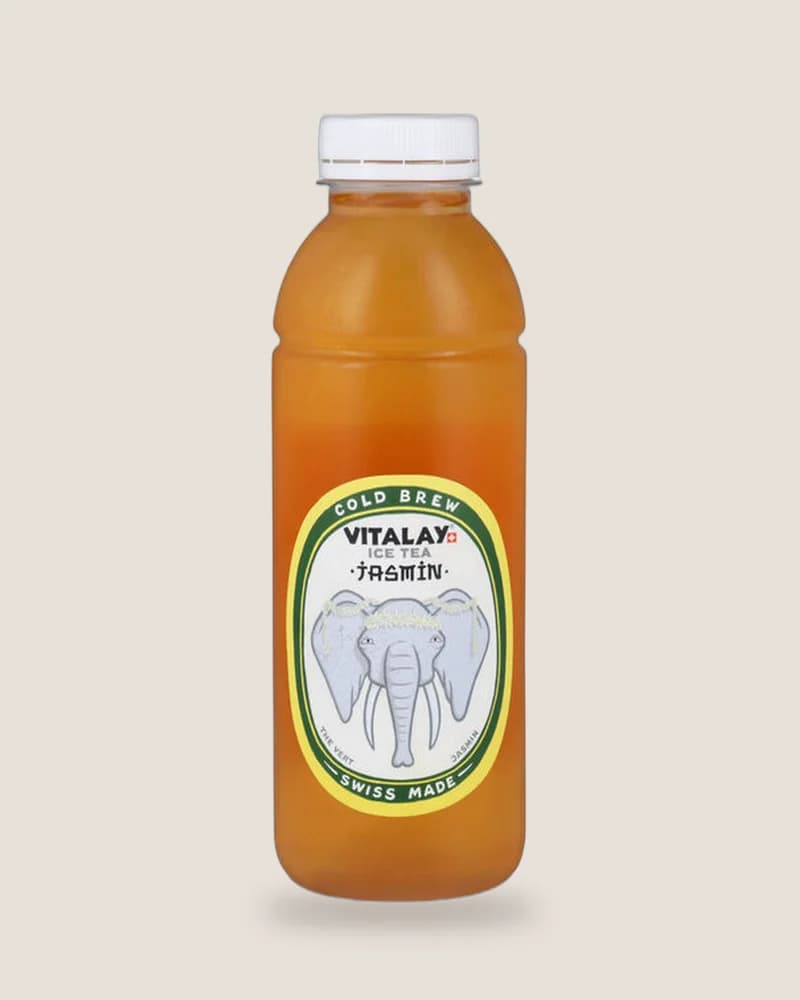
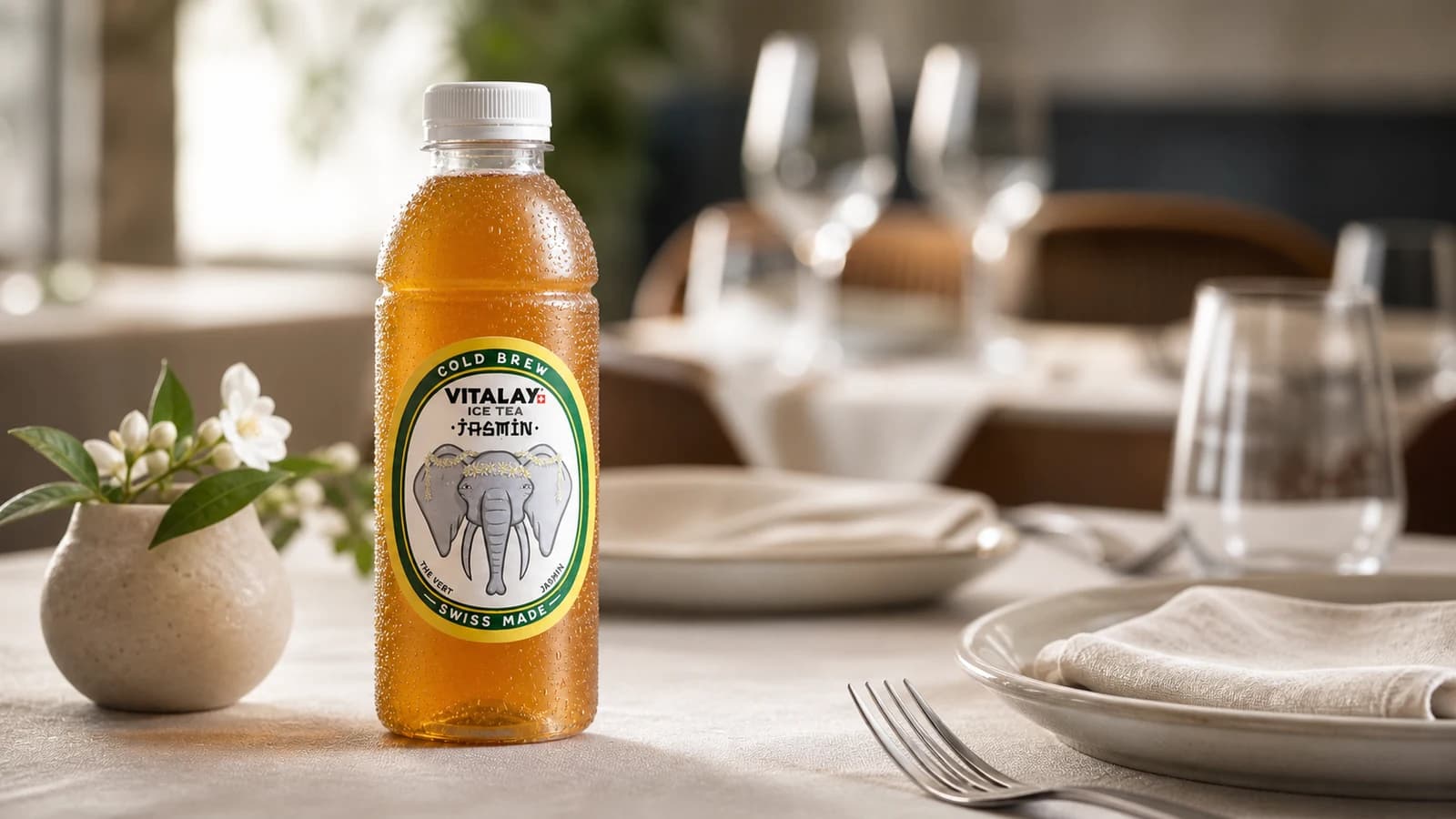
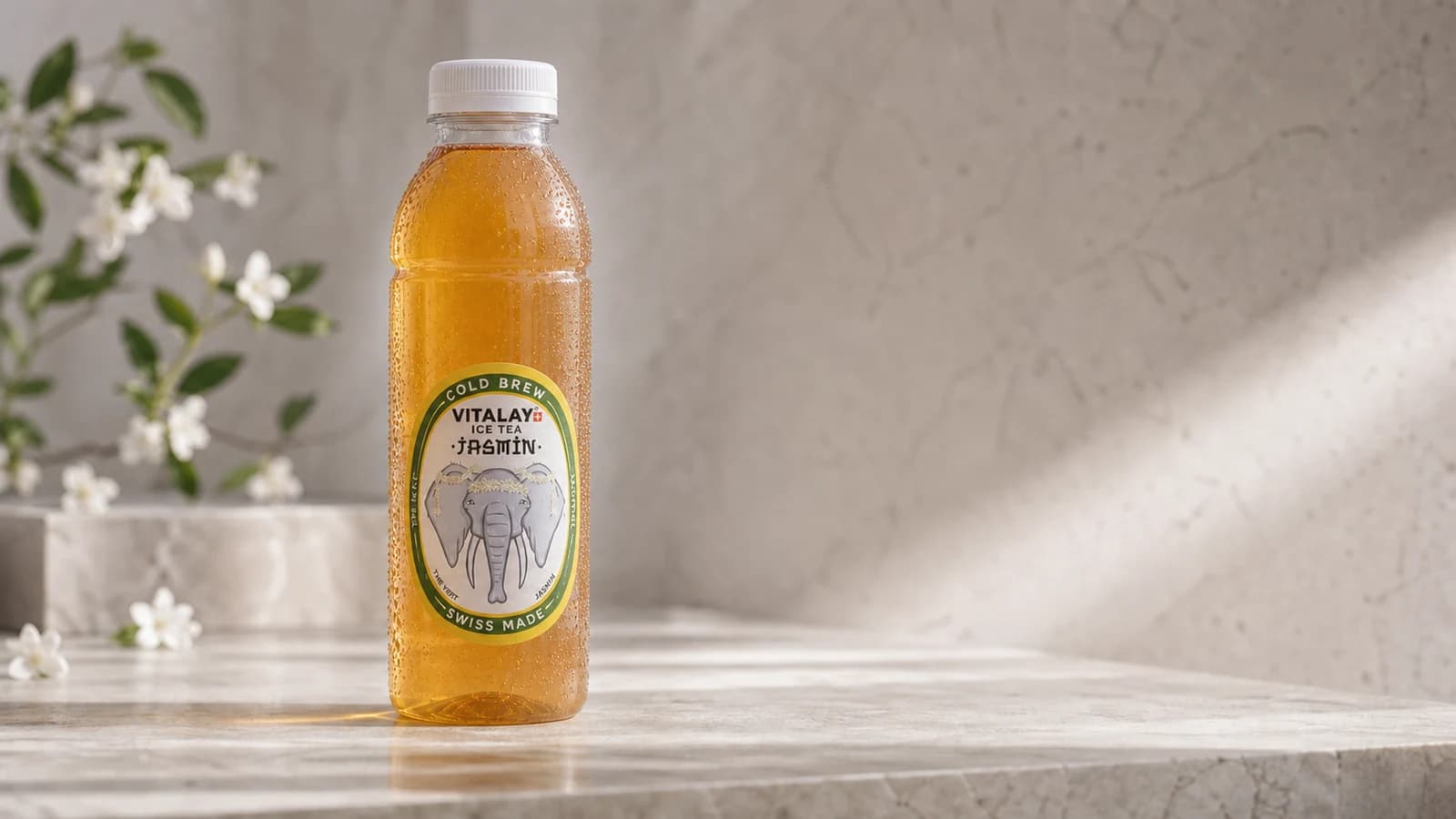
Jasmine Iced Tea: floral and delicate, with subtle sweetness. The most suited to fine dining of the three iced teas. Particularly good with refined dishes, Asian cuisines or light starters. Serve by the bottle or glass.
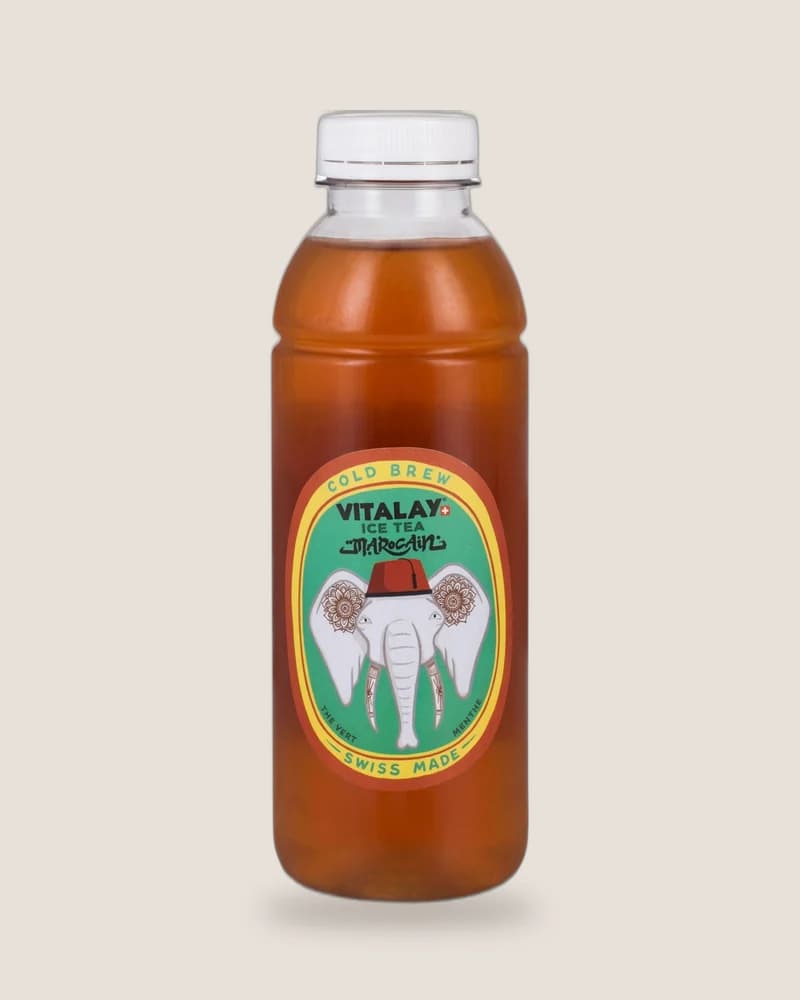
Moroccan Iced Tea: fresh mint on green tea, green and refreshing. More direct than jasmine, more versatile. Works well on a terrace, at lunch, or with Middle Eastern and Mediterranean cuisines.
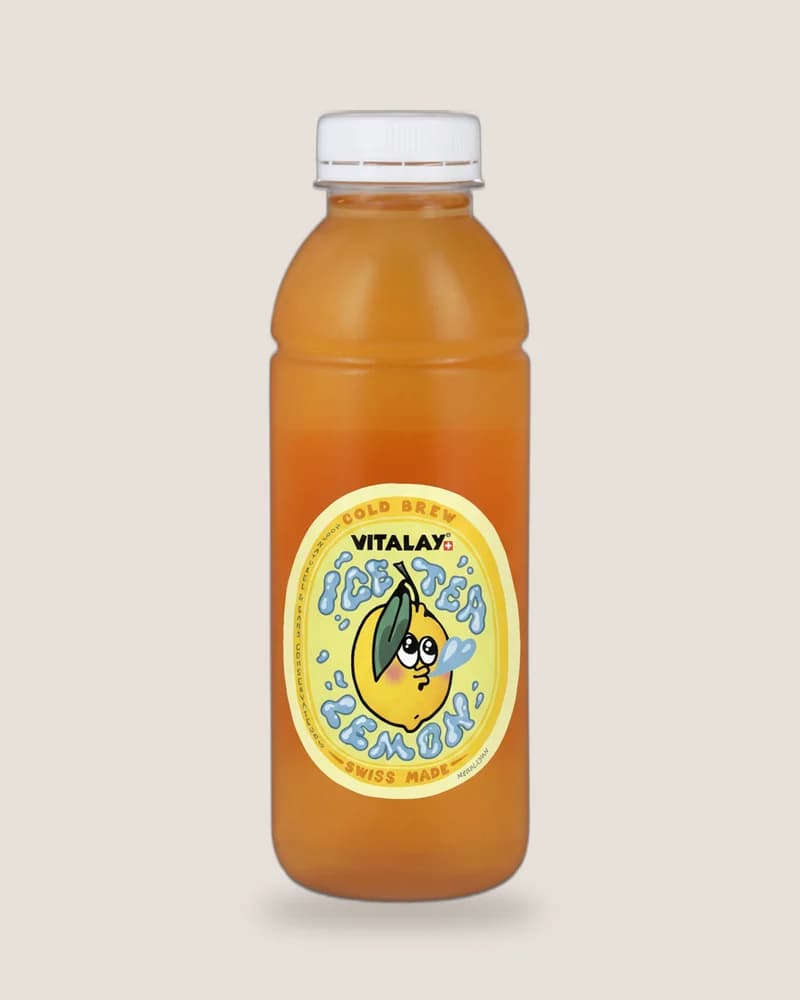
Lemon Iced Tea: black tea, natural lemon. More robust than the other two, slightly more tannic. For establishments seeking an approachable, dependable profile, it is the easiest to sell: familiar without being ordinary.
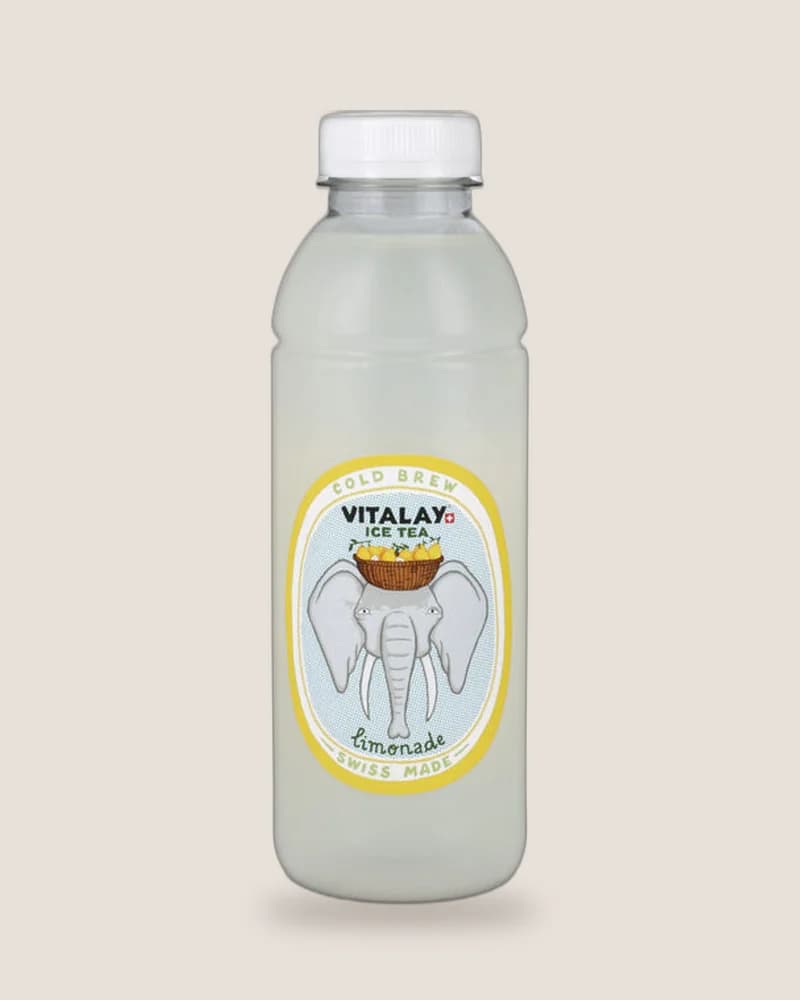
Still Lemonade: natural lemon juice, an infusion of peel, carefully measured sugar. A still lemonade with no tea base and bright acidity. Suited to aperitifs, terraces or light dishes.
All these products come in 50 cl PET bottles, packed in cases of 16. Serve chilled (6-10 °C), by the bottle or glass. No fountain format, no syrup, no dilution: these are finished drinks, ready to serve.
The cold chain: what to plan for
This is the point that raises the most questions in early conversations with venue managers. Is the cold chain really essential? Does it complicate storage?
Yes, it is essential, and it is no more complicated than storing any other fresh drink.
Our products are stabilised with HPP (cold high pressure processing), not heat pasteurisation. HPP inactivates microorganisms without heat, preserving the product’s aromas and freshness. But it does not sterilise the product in the microbiological sense: it stabilises it. Outside the cold chain, HPP stabilisation loses its effectiveness more quickly than heat pasteurisation.
In practice, for a restaurant:
- Transfer to a cold room (2-6 °C) as soon as the delivery arrives
- No storage at room temperature, even for a partially used case
- A clearly marked use-by date on every bottle: no ambiguity
For an establishment already handling deliveries of fish, fresh cheese or vegetables, the principle is identical. It is no more demanding.
Adding the SUM MUM range
For establishments wanting to broaden their offer beyond iced tea, our collaboration with Summum allows us to offer the SUM MUM range, created by Summum:
- Green Juice: cold-pressed green vegetables, a vegetal profile
- Apple Carrot Lemon Ginger Juice: fruity, approachable, naturally sweet juice
- Ginger Turmeric Shot: a 60 ml concentrate with a spicy profile
- Ginger Lemon Shot: a 60 ml concentrate with a bright, tangy profile
These formats suit hotels (room service, breakfast buffets), juice bars and restaurants looking for a distinctive small serving on the menu. Like the entire Summum range, these juices and shots are stabilised with HPP, not heat pasteurisation, and therefore require the same strict cold chain as Vitalay teas, from receipt to service.
Pricing: where Vitalay sits in the HoReCa market
We are not the cheapest on the market. At B2B prices, a Vitalay iced tea costs more than a pack of major-brand iced tea bought from a conventional distributor. The comparison is not relevant: these are different products.
The relevant comparison is with other artisan or premium HoReCa drinks: premium mineral waters, freshly squeezed house citrus juices and artisan kombucha. Within this category, our positioning is reasonable, and the margin a restaurant can apply, serving by the bottle or glass, allows for healthy profitability.
A concrete example: a 50 cl bottle served as two glasses at CHF 5-7 per glass brings the establishment CHF 10-14 per bottle, with a noticeably lower B2B purchase price. The margin is there.
How to get started with Vitalay
No paper catalogue to fill in, no sales representative to contact first. The process is direct:
- Visit our professional page for current products and terms
- Create a B2B account on the website (manual approval by us within 24-48 business hours)
- Place a first trial order: one case of each product you want
- Contact us directly with any operational question or specific requirement
We are a small business. Contact with production is direct. If a product is out of stock or a specific format is requested, the answer comes from the workshop, not an outsourced customer service team.
Further reading
- Vitalay Swiss artisan iced tea: a full introduction to the range
- Jasmine Iced Tea, Moroccan Iced Tea, Lemon Iced Tea: the three iced tea profiles for HoReCa
- Still Lemonade: the bright lemon option with carefully measured sugar
- Building a non-alcoholic drinks menu for your restaurant: the full editorial guide
- Vitalay professional offer: case formats, B2B prices, delivery in French-speaking Switzerland
At a glance
Frequently asked questions
- Does Vitalay deliver directly to restaurants and hotels in Switzerland?
- Yes. Vitalay offers B2B cold-chain delivery to restaurants, hotels, bars and food service venues in French-speaking Switzerland. The minimum order is one case per product (16 bottles). Full terms are detailed on our professional page.
- Which Vitalay products are available for HoReCa?
- The active B2B products are Jasmine Iced Tea, Moroccan Iced Tea, Lemon Iced Tea and Still Lemonade, in 50 cl PET bottles. SUM MUM juices and shots (Green Juice, Ginger Turmeric Shot, Ginger Lemon Shot, Apple Carrot Juice) are also available through our collaboration with Summum, which created the range.
- Does Vitalay iced tea require a cold chain?
- Yes, absolutely. Our products are stabilised with HPP, not heat pasteurisation. They must be kept refrigerated (between 2 and 6 °C) from storage to service. The use-by date is shown on every bottle. A restaurant storing our bottles at room temperature will see their quality deteriorate prematurely.
- What is the difference between an artisan iced tea supplier and a major-brand distributor?
- An artisan supplier such as Vitalay offers products made in limited quantities, with direct traceability of production methods and raw ingredients. Your contact is the producer, not a multi-brand distribution sales representative. The trade-off: minimum volumes and availability are not comparable to major brands sold through supermarkets.
- Can Vitalay provide product documentation for a restaurant menu?
- Yes. We provide individual product sheets covering ingredients, allergens, nutritional values and production methods. These can be used for menu documentation, staff training or the establishment’s administrative needs.