Product7 min read
Swiss artisan iced tea: what sets real cold brew apart from industrial iced tea
Sugary iced tea, synthetic flavourings, heat pasteurisation: what separates Swiss artisan iced tea from a supermarket can, and why you can taste the difference.
By Ciprian
The label says "peach iced tea". The ingredients say "water, sugar, tea flavouring, citric acid, peach flavouring". That is not iced tea. It is flavoured sugar. In French-speaking Switzerland, as elsewhere, confusion between artisan iced tea and industrial iced tea persists, encouraged by packaging that talks about "selected tea leaves" on products containing only traces of them. This article sets out the practical differences, point by point.
Raw ingredients: whole leaves versus extract
The distinction begins before production. Artisan iced tea starts with real tea leaves, whole or broken, sometimes mixed with dried flowers (jasmine, orange blossom) or fresh herbs (mint). Leaf quality directly determines the final profile: poor jasmine tea produces a flat jasmine flavour, whatever happens afterwards.
Industrial production takes a different approach. It often uses concentrated tea extracts or natural tea flavourings: preparations derived from tea but reduced to a few key compounds, standardised and endlessly reproducible. The result is a consistent taste from season to season and continent to continent. That is useful for standardisation, but in practice the drink has little left of the original tea.
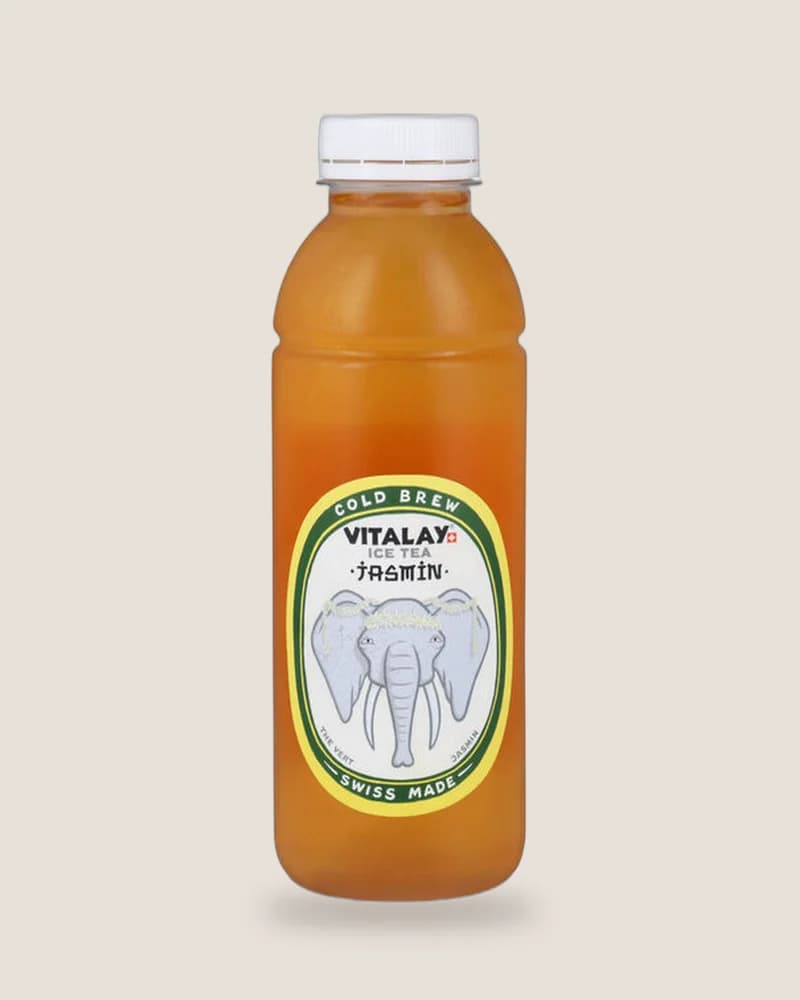
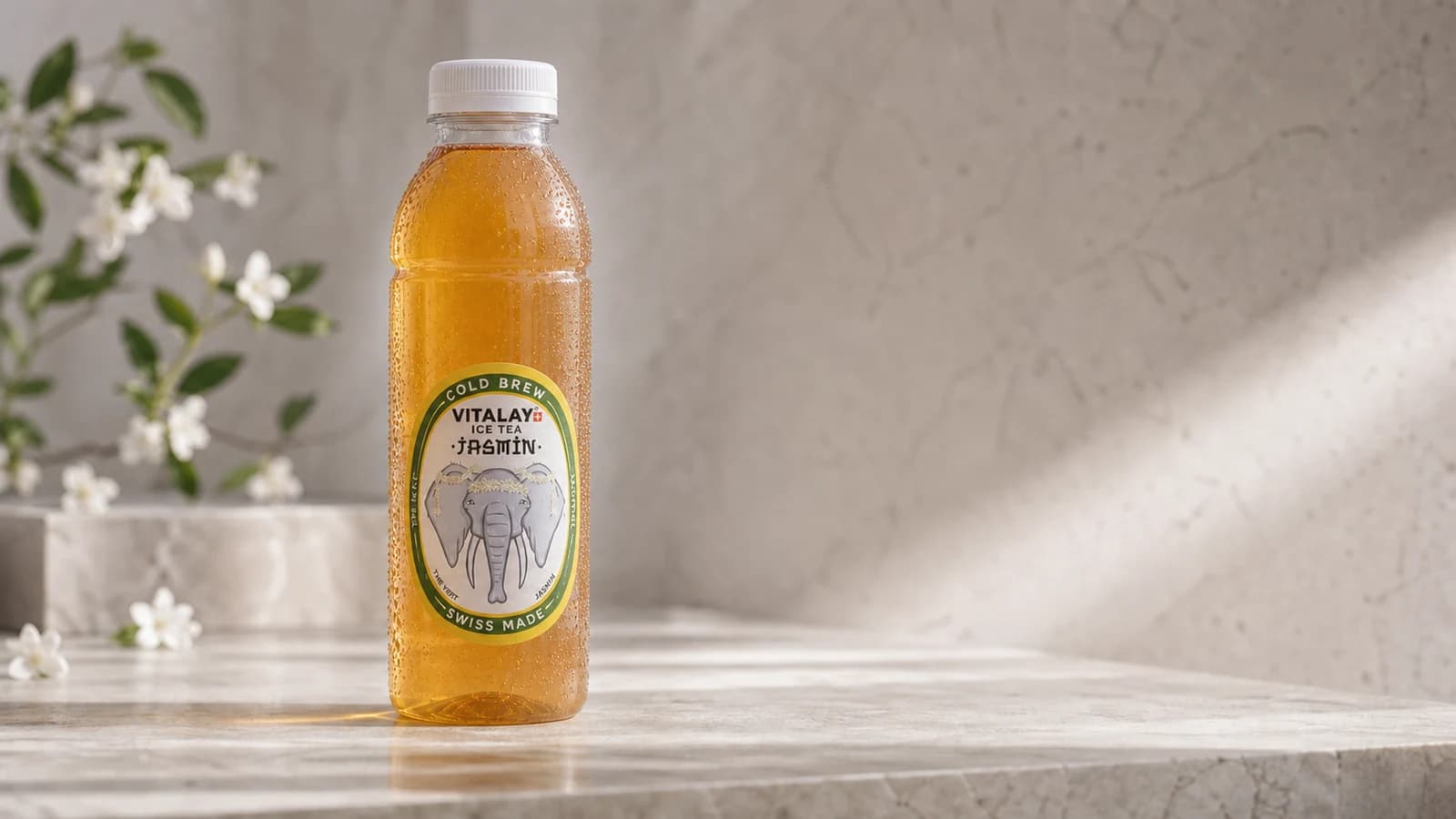
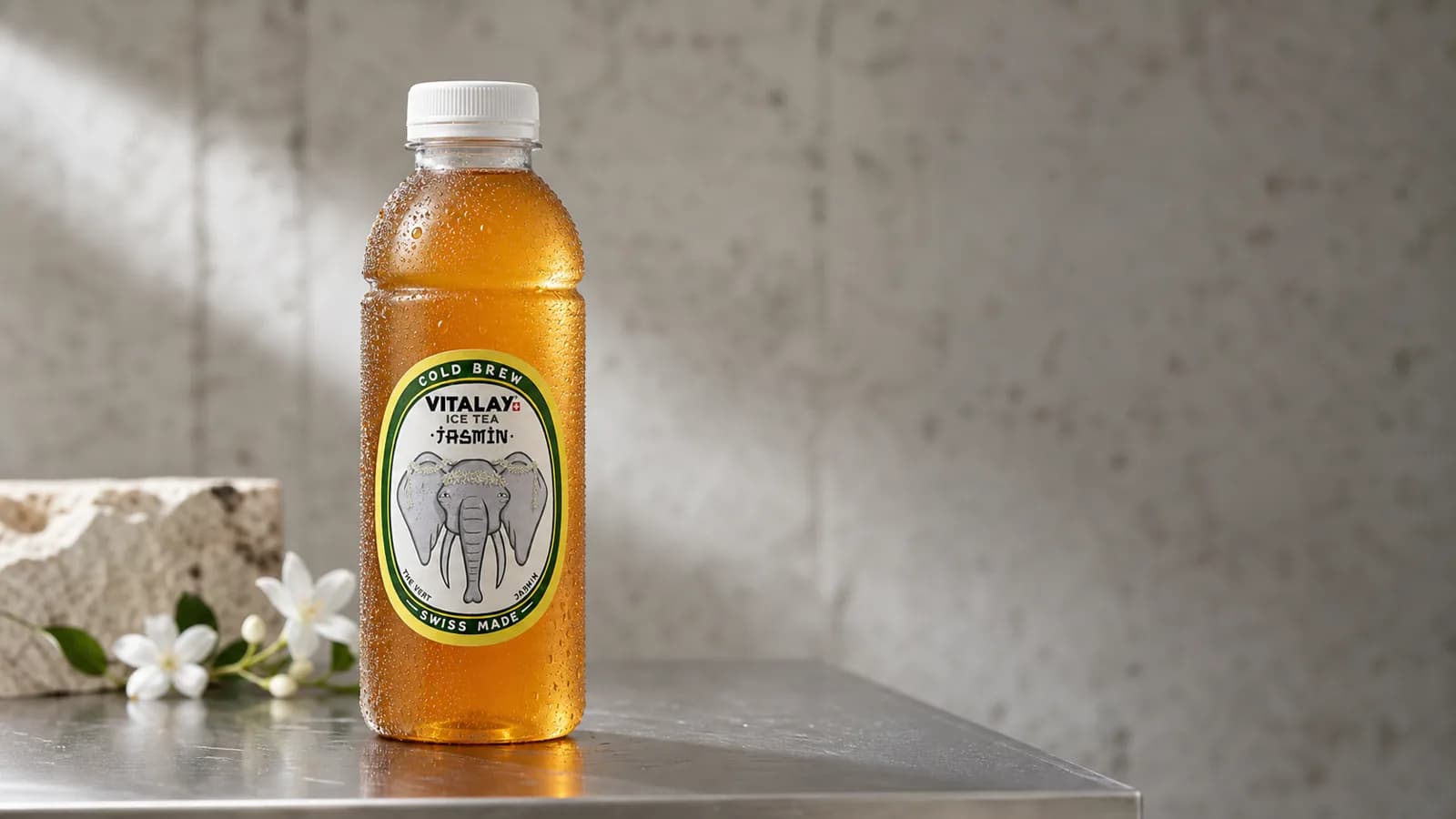
For Jasmine Iced Tea, we use jasmine green tea in which the flowers are introduced during drying, rather than a "jasmine flavouring" added after brewing. These are fundamentally different products.
Brewing method: cold versus hot
This is the second dividing line. Cold brew involves immersing the leaves in cold water for twelve hours. No heat, no shortcuts. It is slow and demands production space, and it is precisely what gives the tea its clear profile.
Temperature changes what is extracted from the leaves. Hot brewing (90-95 °C) quickly extracts tannins, amino acids and caffeine, along with the compounds that create astringency and bitterness. Cold brewing extracts more slowly, mainly natural sugars and volatile aromatic compounds, leaving some tannins in the leaves. The result is a gentler, less bitter tea with clearer notes.
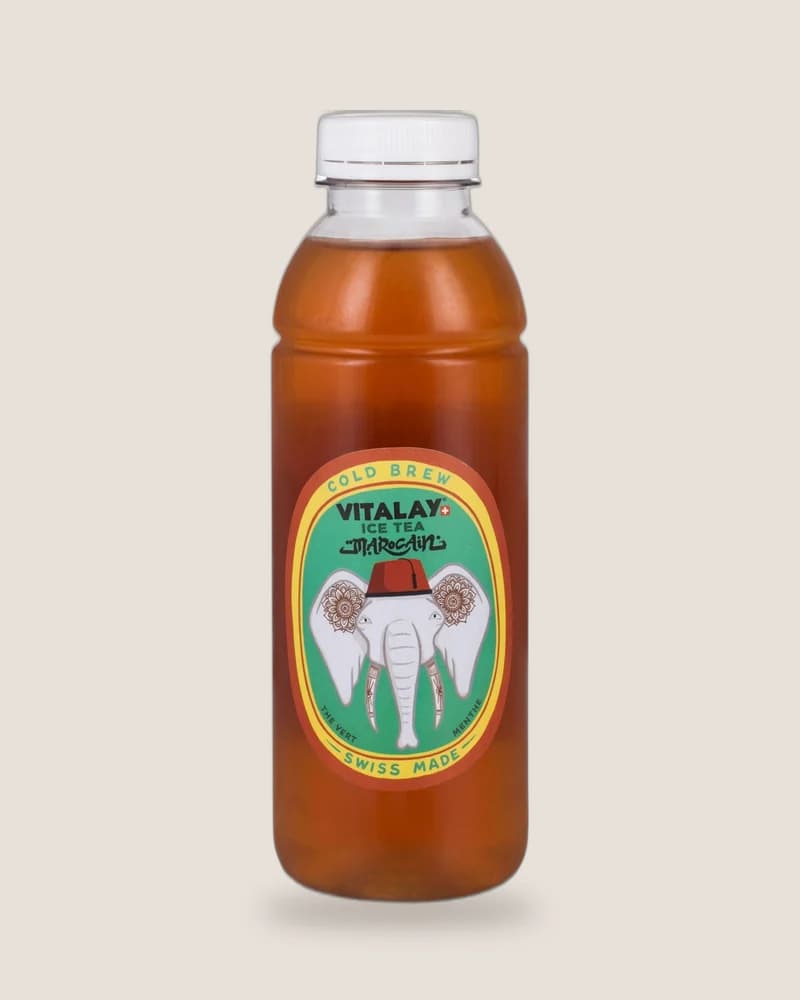
In mass production, hot brewing is standard for a simple reason: it takes twenty minutes, not twelve hours. The ratio of space to productivity is incomparable. For Jasmine Iced Tea and Moroccan Iced Tea, cold brewing is not a marketing claim: it is the technical requirement for achieving this profile.
Stabilisation: heat pasteurisation versus HPP
A drink made in a workshop and sold in bottles must be stabilised for transport and to remain safe until consumed. Here, the approaches diverge completely.
Heat pasteurisation heats the liquid to 70-85 °C for a few seconds to a few minutes. Pathogens are destroyed, but heat degrades the most volatile aromatic compounds, the very ones cold brewing preserved. A tea cold-brewed for twelve hours, then pasteurised at 80 °C, loses some of what made it interesting. Jasmine becomes flat. Mint loses its edge. Lemon takes on a slightly cooked character.
HPP (cold high pressure processing) applies around 600 megapascals of pressure to sealed bottles at 4-8 °C for a few minutes. Pathogens are mechanically inactivated. Aromas remain intact because heat is never involved. This is the process we use at Vitalay: read the details in our article on HPP.
The direct result: a bottle of Jasmine Iced Tea opened today has the same aromatic profile as when it left the workshop six weeks earlier. That is not the case with heat-pasteurised tea.
Sugar: the least transparent variable
Supermarket labels do not make things easy to understand. In Switzerland, the food ordinance requires sugar content to be shown per 100 ml, but few consumers stop to read that line.
A "green tea" iced tea from a major soft drinks brand often contains more sugar than a glass of cola. That is not a problem in itself: it is a sweet drink to be consumed as such. But the "tea" presentation creates confusion about the nature of the product.
At Vitalay, our iced teas are formulated so that sweetness is noticeable without dominating the profile. Unrefined cane sugar is carefully measured: 4.8 to 7 g per 100 ml for the iced teas depending on the product, and 7.5 g for Still Lemonade. It leaves the tea, jasmine, mint or lemon in the foreground.
Flavourings: natural, nature-identical and artificial
Swiss and European regulations distinguish three categories of flavouring:
- Natural flavouring: extracted from a real plant or animal source (for example, jasmine extract obtained by distillation or extraction)
- Nature-identical flavouring: a chemically synthesised molecule identical to a natural one (for example, synthetic linalool, a compound found in jasmine)
- Artificial flavouring: a molecule that does not occur in nature
Depending on the case, all three can legally appear under "flavouring" or "natural flavouring", making labels difficult for a non-specialist to interpret. A "natural tea flavouring" may be a real extract or a chemical reconstruction of the tea profile.
In an artisan iced tea made with whole leaves, the question does not arise: the aroma comes from brewing, not from an addition. Vitalay Still Lemonade is made with pressed lemon juice, not "lemon flavouring". The difference is clear when you taste it.
Why it costs more
It is a fair question. Artisan iced tea made in Switzerland with quality leaves, cold-brewed for twelve hours and stabilised with HPP, costs more to produce than industrial iced tea. Several factors explain the gap:
Tea leaves. Selected raw ingredients cost considerably more than the concentrated extracts used in mass production.
Time. Twelve hours of cold brewing require production space, tanks and refrigeration logistics. A twenty-minute hot brew uses ten times less space for equivalent capacity.
HPP. The process is outsourced to a specialist provider and charged per batch, with a cost per bottle noticeably higher than in-line heat pasteurisation.
Volumes. Industrial iced tea produced in millions of units spreads these costs across a scale entirely unlike Swiss artisan production. Those economies of scale are not available.
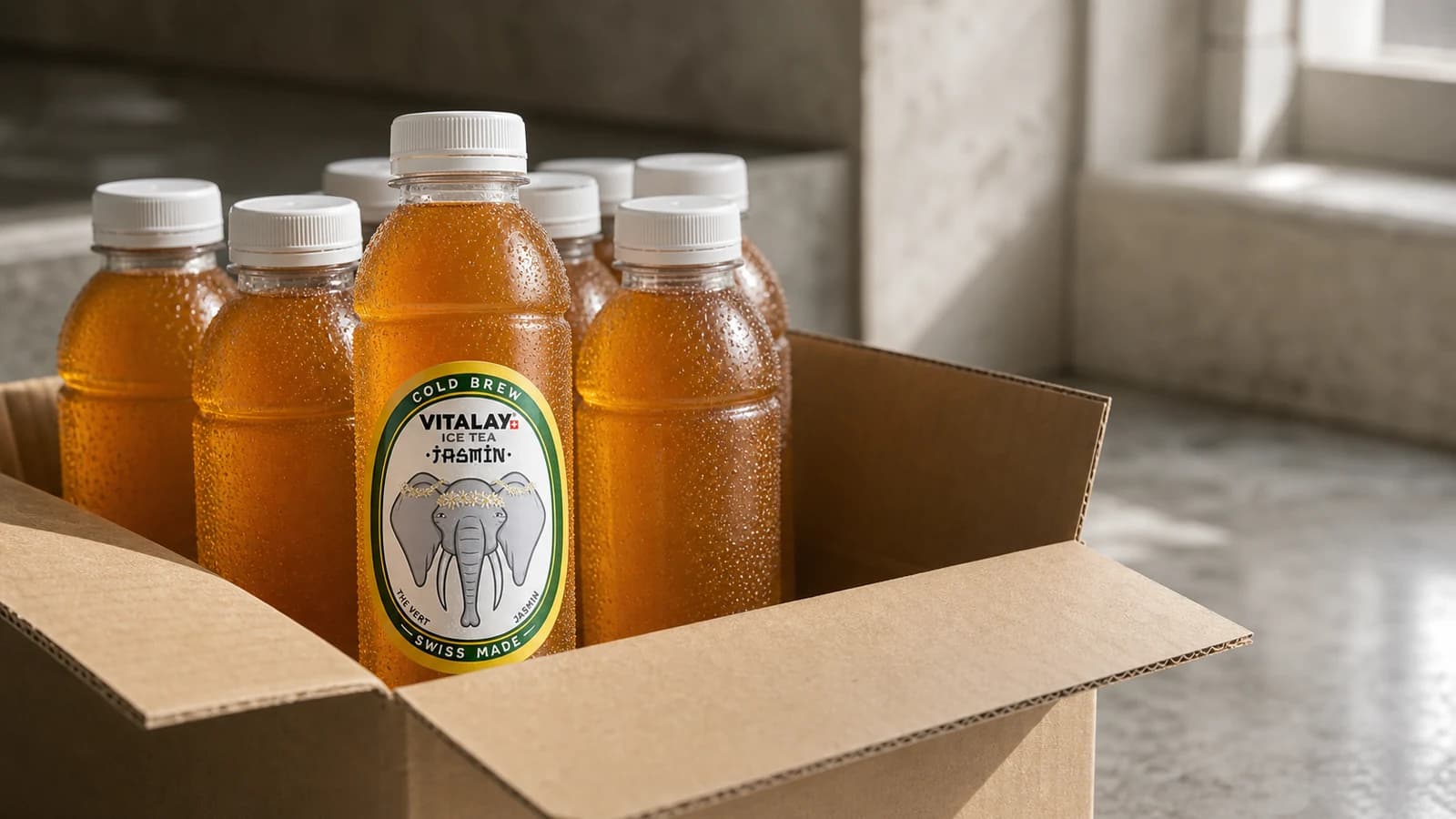
This is production arithmetic, not premium rhetoric to justify a price. For restaurants and bars seeking a non-alcoholic drink that earns its place on the menu, our B2B offer details the available formats and delivery terms in Switzerland.
What you taste in the glass
The difference is not subtle. It is apparent from the first sip, particularly in three ways:
Aromatic clarity. A jasmine cold brew has a clear, fresh floral note. A heat-pasteurised jasmine iced tea has a heavier, less precise aroma, often accompanied by a slight "cooked" note.
Bitterness. Cold-brewed iced tea is much less bitter than hot-brewed tea, even with the same brewing time. Astringency is reduced and the finish is clean.
Persistence. Cold brew aromas linger longer on the palate. This is not an artificially prolonged finish: the aromatic compounds are simply present in a higher relative concentration and have not been degraded by heat.
If you have both available, try comparing a bottle of Jasmine Iced Tea at 8 °C with any supermarket jasmine iced tea. You do not need to be an expert to notice the difference.
Switzerland: a market still taking shape
In France, the United Kingdom and the United States, artisan cold brews have been available through premium retail for a decade. In French-speaking Switzerland, the market is taking shape. Buying habits are still dominated by major soft drinks and iced tea brands, leaving real room for drinks built around quality.
Vitalay is currently one of the few Swiss brands producing entirely cold-brewed iced teas, stabilised with HPP and sold through both B2C and B2B channels. This is not a niche chosen for ideological reasons: it answers an existing need that the mass market does not adequately meet.
Further reading
- Vitalay Swiss artisan iced tea: the full range and production background
- What is HPP and why does Vitalay use it?: the technical details of the stabilisation process
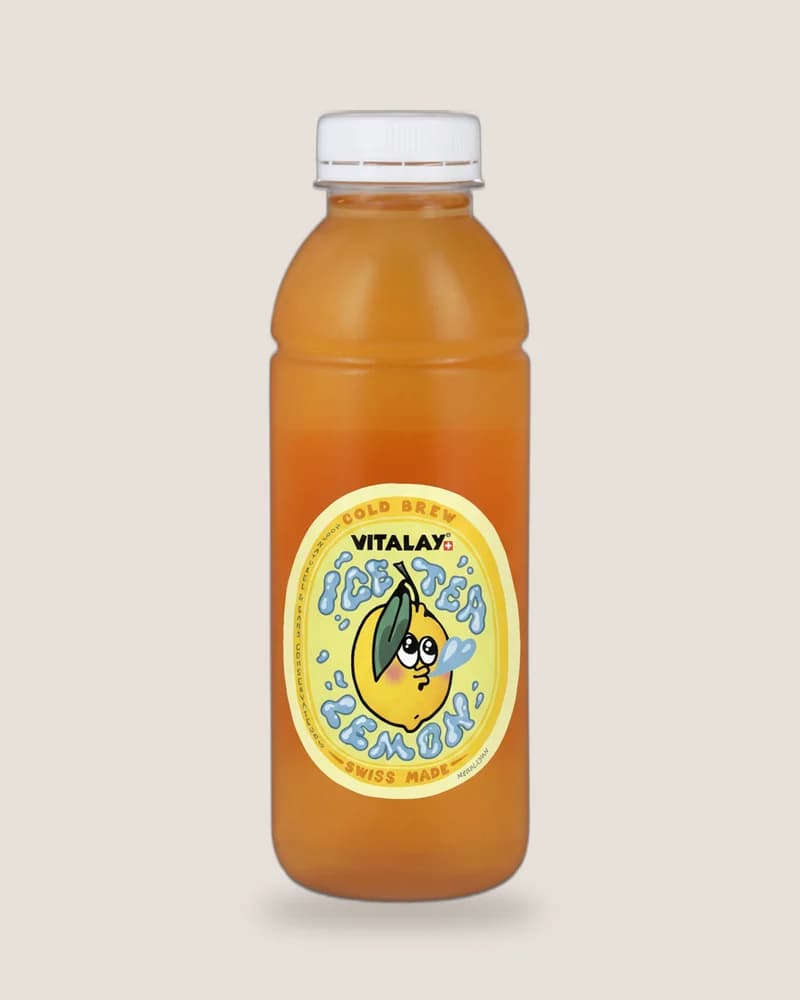
- Jasmine Iced Tea, Moroccan Iced Tea, Lemon Iced Tea: the full range
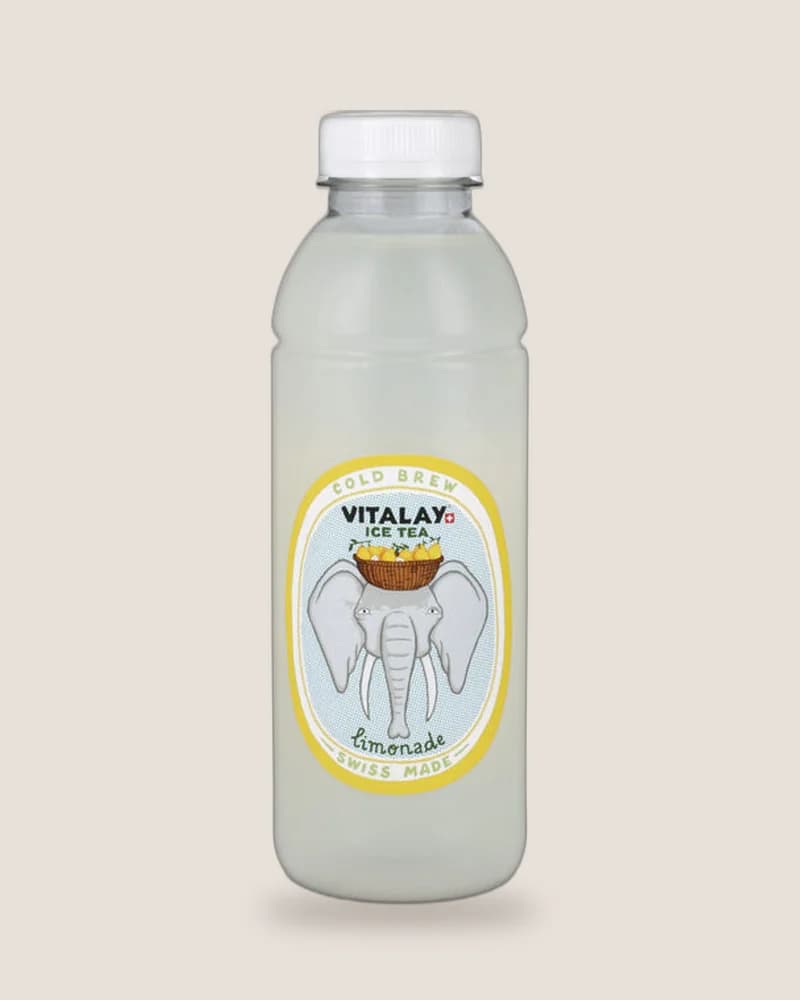
- Still Lemonade: the same approach, pressed citrus fruit, HPP
- B2B offer: for restaurants, bars and hotels looking to add our drinks to their menus
At a glance
Frequently asked questions
- What exactly is artisan iced tea?
- Artisan iced tea is made by cold-brewing real tea leaves for twelve hours, without heat or artificial flavourings, and stabilising it without heat pasteurisation. The result is an aromatic profile close to freshly brewed tea, with gentle tannins and the natural notes of the plants used.
- Does artisan iced tea contain sugar?
- Yes, most do. At Vitalay, we sweeten our iced teas with carefully measured amounts of unrefined cane sugar (4.8 to 7 g per 100 ml depending on the product), without sweeteners, so that the tea stays at the forefront.
- Why do industrial iced teas taste different?
- Heat pasteurisation at 70-85 °C, used in industrial mass production, degrades the volatile aromatic compounds in tea (esters, terpenes, floral notes). The slightly cooked or flat taste is characteristic. Cold brew stabilised at a low temperature, notably through HPP, preserves these compounds and retains sensory qualities closer to fresh tea.
- Is Swiss artisan iced tea available outside the major cities?
- Vitalay supplies its artisan iced teas in French-speaking and German-speaking Switzerland, through its online shop for B2C customers and through B2B supply for restaurants, bars and hotels. Delivery maintains the cold chain.
- Can artisan iced tea be served instead of wine in a restaurant?
- Yes. With their aromatic complexity and carefully balanced sweetness, quality artisan iced teas naturally fit a restaurant menu as a considered non-alcoholic alternative. They can be served by the bottle, carafe or glass, with thoughtful food and drink pairings.