Product7 min read
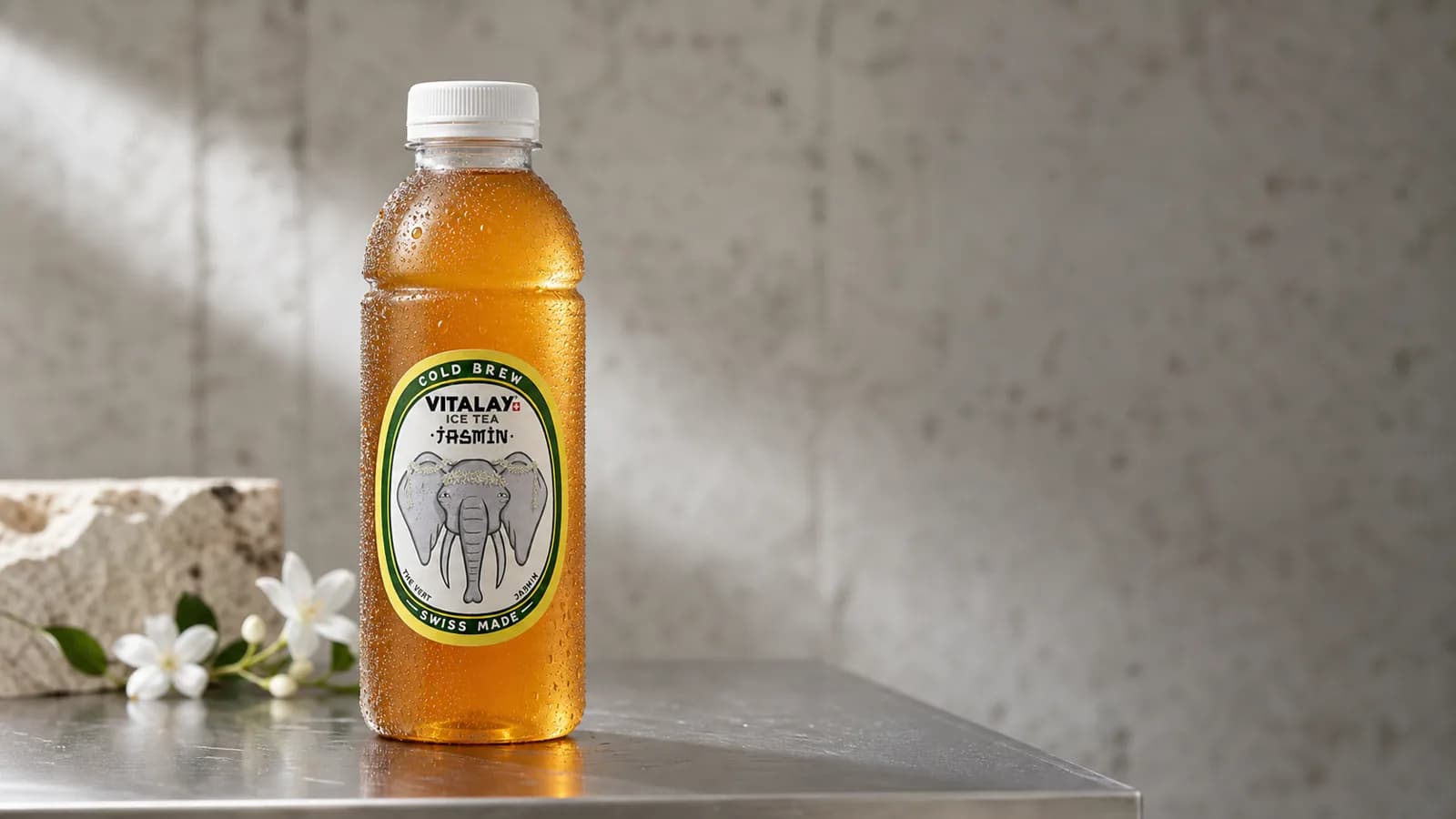
Vitalay Jasmine Iced Tea: cold brewing, real flowers, HPP
Behind Vitalay Jasmine Iced Tea: twelve hours of cold brewing, jasmine green tea scented with real flowers, stabilised with HPP. How we create this clear floral profile.
By Ciprian
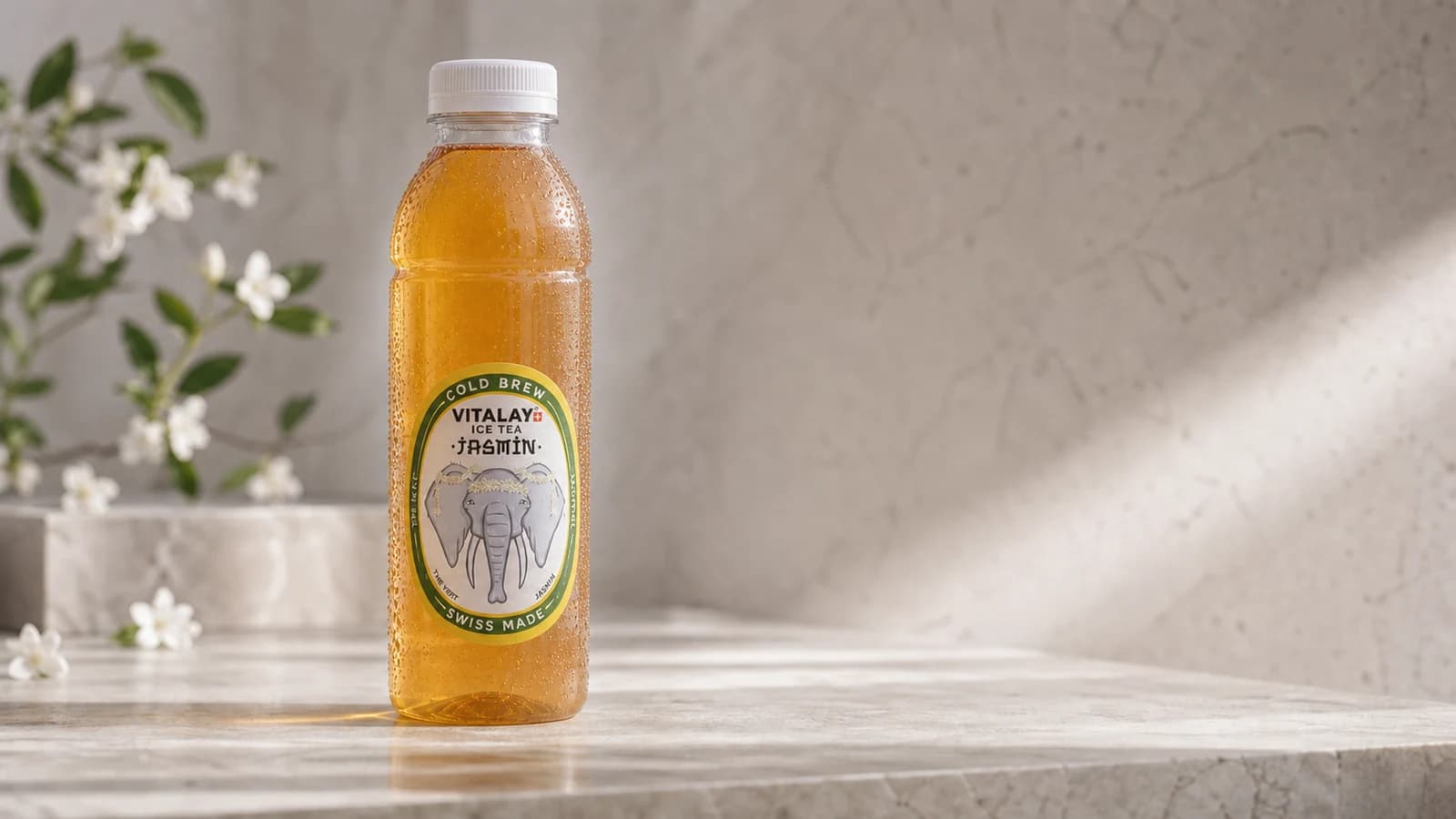
Jasmine flowers have been used to scent tea in China for centuries. The process is artisanal: green tea leaves are placed near fresh jasmine flowers during drying, sometimes for several consecutive nights, until the leaves absorb the floral aroma. This is a drying technique, not a chemical addition.
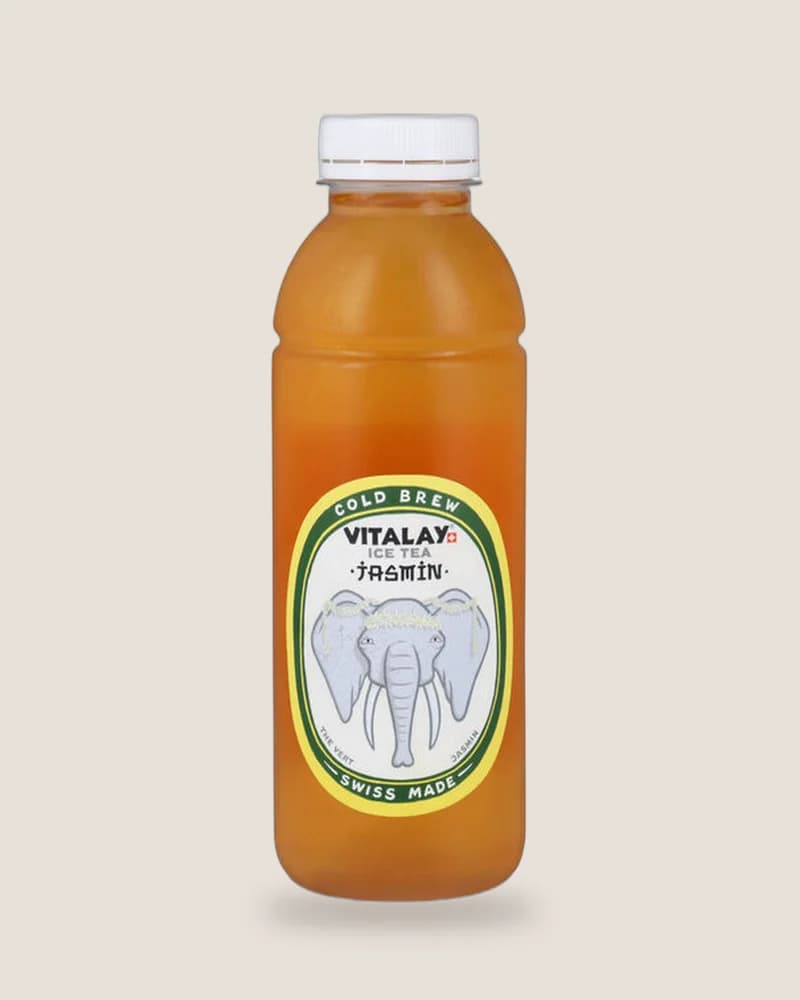
This jasmine green tea, with flowers introduced during production, is what we use at Vitalay for our Jasmine Iced Tea. Cold brewing reveals what this type of tea has to offer.
Why jasmine and cold brew belong together
Jasmine is a flower with volatile aromas. Its main scent compounds, linalool, benzyl acetate and indole, are precisely the molecules heat degrades first. Hot brewing at 85-90 °C extracts tea efficiently, but subjects these compounds to thermal stress that reduces or transforms them. The result is a "heavy" jasmine, sometimes slightly artificial on the palate.
Cold brewing for twelve hours at a low temperature extracts very differently. The process is slow. Volatile molecules have time to enter the solution without being degraded by heat. At the end of brewing, we obtain a more precise, finer jasmine, without the "cooked" note found in some industrial jasmine teas.
This comes down to extraction chemistry, not marketing.
What goes into the bottle
Vitalay Jasmine Iced Tea has a deliberately simple composition: jasmine green tea, water and a carefully measured amount of sugar. No added jasmine flavouring. No colouring. No synthetic additives.
Choosing the jasmine green tea is the most decisive step. We work with leaves scented with flowers during drying using the traditional method, rather than "jasmine-flavoured" teas where flavouring is sprayed onto the leaves after production. The difference is clear in the infusion: the first method gives an integrated, lasting floral note; the second often produces a more intense aroma on opening that quickly disappears.
Brewing time: twelve hours, no less
We cold-brew jasmine green tea for twelve hours. This is not an arbitrary number. Below eight hours, extraction is incomplete: the profile is watery, the tannins underdeveloped and the jasmine aroma too faint. Beyond sixteen hours, tannin extraction becomes more pronounced, creating slight residual bitterness.
The twelve-hour window produces a balance: enough body and tannin to give the drink presence on the palate, with sufficiently restrained astringency to keep it refreshing and light. This is the profile we wanted to bottle: clear, floral, gently sweet, with a dry finish.
Twelve hours of brewing require tank space, refrigeration logistics and production time that industrial hot production, with its twenty-minute brew, does not. This is one factor behind the higher production cost of artisan iced tea.
The role of sugar
Jasmine Iced Tea contains sugar in a deliberately measured amount. Cold-brewed jasmine has a natural sweetness, but without sugar the profile would be too dry to enjoy straight from the bottle. We aim for a balance: sweetness supports the jasmine without masking it.
Our iced teas are formulated with carefully measured sugar: 4.8 g per 100 ml for Jasmine, using unrefined cane sugar and no sweeteners. Sugar supports the aromas rather than defining the product’s taste. For a detailed comparison with industrial iced teas, Swiss artisan iced tea sets out the differences in composition point by point.
Stabilisation: HPP after cold brewing
Once the infusion is complete, filtered and formulated, the bottles are sealed and sent for HPP (cold high pressure processing). The pressure tank reaches 600 megapascals at 4-8 °C for a few minutes. Any pathogens present are inactivated. The aromatic profile is not exposed to heat.
The process is consistent: cold-brew for twelve hours to preserve the volatile jasmine compounds, then stabilise at a low temperature to retain them in the bottle. Heat pasteurisation after cold brewing would be contradictory: it would degrade at 80 °C what we protected for twelve hours.
For details of HPP, how it works and its limits, we have published a full technical article: What is HPP and why does Vitalay use it?.
What you taste in the glass
Served between 6 and 10 °C, Jasmine Iced Tea has a profile quite distinct from a conventional jasmine iced tea. Three differences are apparent from the first sip:
The clarity of the floral note. The jasmine is precise without being overpowering. It does not smell like the "jasmine flavouring" in industrial teas, a note that is often rather heavy and heady. It smells of brewed jasmine, more subtle and more true to the flower.
The absence of underlying bitterness. Hot-brewed tea almost always has a slight bitter base, even when carefully measured. Cold brewing noticeably reduces this underlying bitterness. The finish is dry but clean, without unpleasant lingering astringency.
Length on the palate. The more concentrated, undegraded aromatic compounds of cold brew linger for a few seconds after each sip. This is aromatic persistence: the drink is not heavy, its profile simply lasts to the end.
Serving: temperature and pairings
For the best service, keep it between 6 and 10 °C. Below 5 °C, the cold masks the floral aromas and the drink loses complexity. Above 12-13 °C, sugar becomes more noticeable and jasmine takes on a rounder character.
In a restaurant, Jasmine Iced Tea pairs well with light starters (raw vegetables, citrus salads, fish tartares), Asian dishes (teppanyaki, sushi, lighter Thai cooking) and floral desserts (panna cotta, flower sorbets). For a restaurant menu seeking a non-alcoholic alternative with character, it is a choice we recommend. B2B supply terms are detailed on our professional page.
Compared with Moroccan Iced Tea
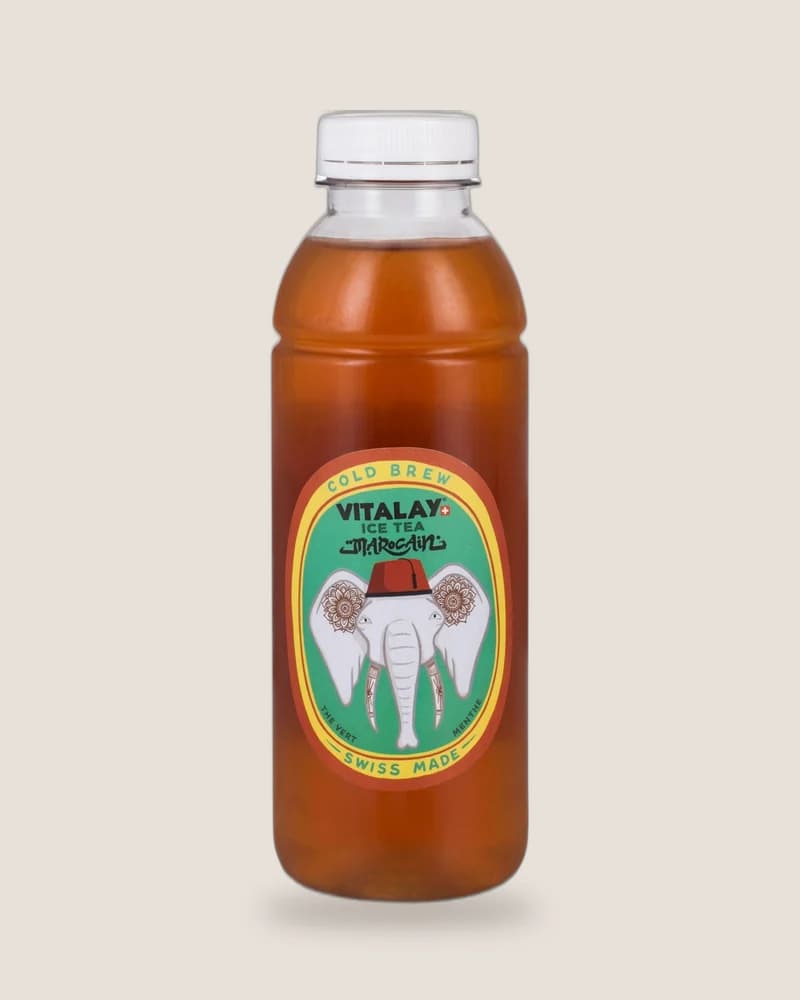
While Jasmine is floral and delicate, Moroccan Iced Tea is its more direct, green counterpart: fresh mint on a green tea base, with a sharper, less floral profile that is more refreshing in hot weather. Both share the same production process (cold brewing + HPP), but suit slightly different drinking occasions.
Jasmine is better suited to table service and food pairings. Moroccan Mint works better when standing, between courses or on a terrace. This distinction can guide an F&B manager putting together a non-alcoholic drinks menu.
A drink for the season
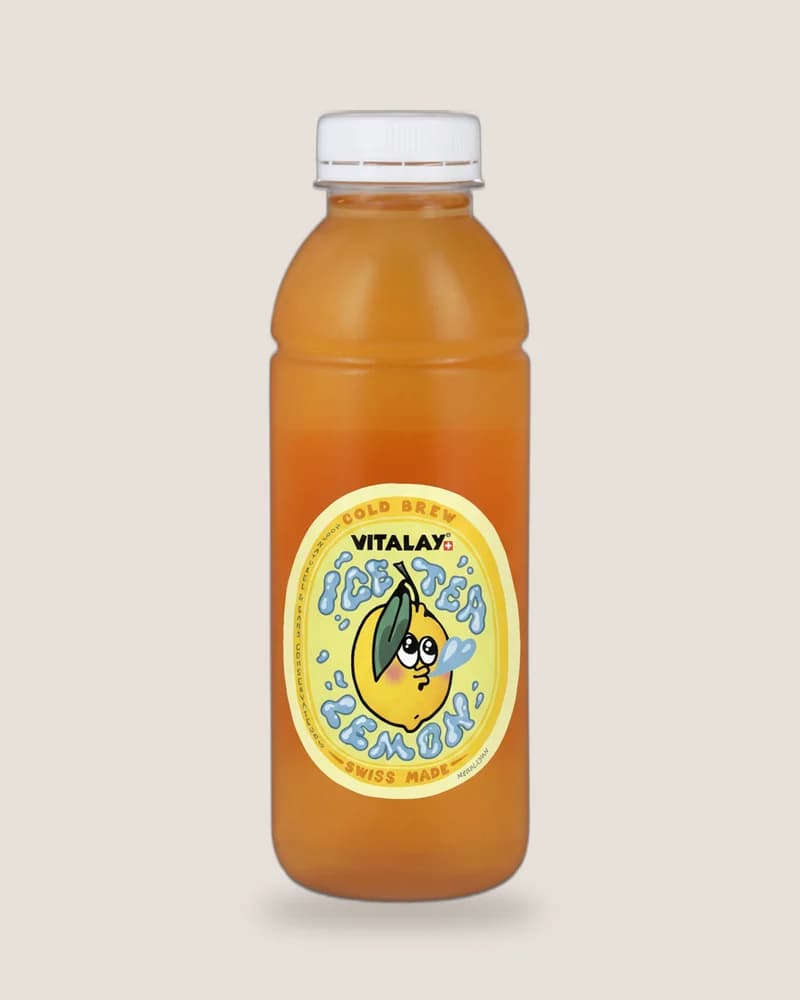
Jasmine Iced Tea is produced year-round, but its profile is particularly suited to spring and summer. The floral freshness of jasmine works well in the heat. In autumn and winter, its delicate character can feel less suited to the season: this is where Lemon Iced Tea, with its more robust black tea, can take its place on the menu.
At Vitalay, we develop our range around seasons and occasions, rather than as a collection of interchangeable products. Jasmine has its place, as does Moroccan Mint. Lemonade is a product in its own right, distinct from iced tea.
Further reading
- Vitalay Swiss artisan iced tea: the full range: Jasmine, Moroccan Mint, Lemon, Still Lemonade
- Jasmine Iced Tea: full product details, ingredients and availability
- Moroccan Iced Tea: compare the mint and jasmine profiles
- What is HPP and why does Vitalay use it?: the stabilisation process in detail
- Swiss artisan iced tea: a comparison with industrial iced teas
- Vitalay professional offer: B2B formats and terms for restaurants and bars
At a glance
Frequently asked questions
- Which jasmine flowers are used in Vitalay Jasmine Iced Tea?
- Vitalay Jasmine Iced Tea is made from jasmine green tea in which the flowers are introduced during leaf drying, with no flavouring added after brewing. The jasmine flower scents the leaf directly during the traditional drying process, giving the infusion its fine floral note rather than a synthetic flavour.
- Why cold-brew jasmine instead of brewing it hot?
- Cold brewing extracts jasmine aromatic compounds differently: floral and lightly sweet notes are better preserved, while tannic bitterness and astringency stay in the background. Hot-brewed jasmine tea has more bitterness and a heavier profile. Cold brewing takes twelve hours but produces a noticeably more delicate result.
- Does Vitalay Jasmine Iced Tea contain artificial flavourings?
- No. The aromatic profile of Jasmine Iced Tea comes exclusively from the jasmine green tea used for brewing. No jasmine flavouring, natural or artificial, is added after brewing. The ingredients list is short and clear.
- How should Vitalay Jasmine Iced Tea be stored?
- Keep the bottle in the refrigerator with the cold chain unbroken. HPP stabilises the product without sterilising it: it is not a long-life preserve. The use-by date is shown on each bottle. Once opened, consume within 24 to 48 hours.
- Is Vitalay Jasmine Iced Tea available for restaurants and bars?
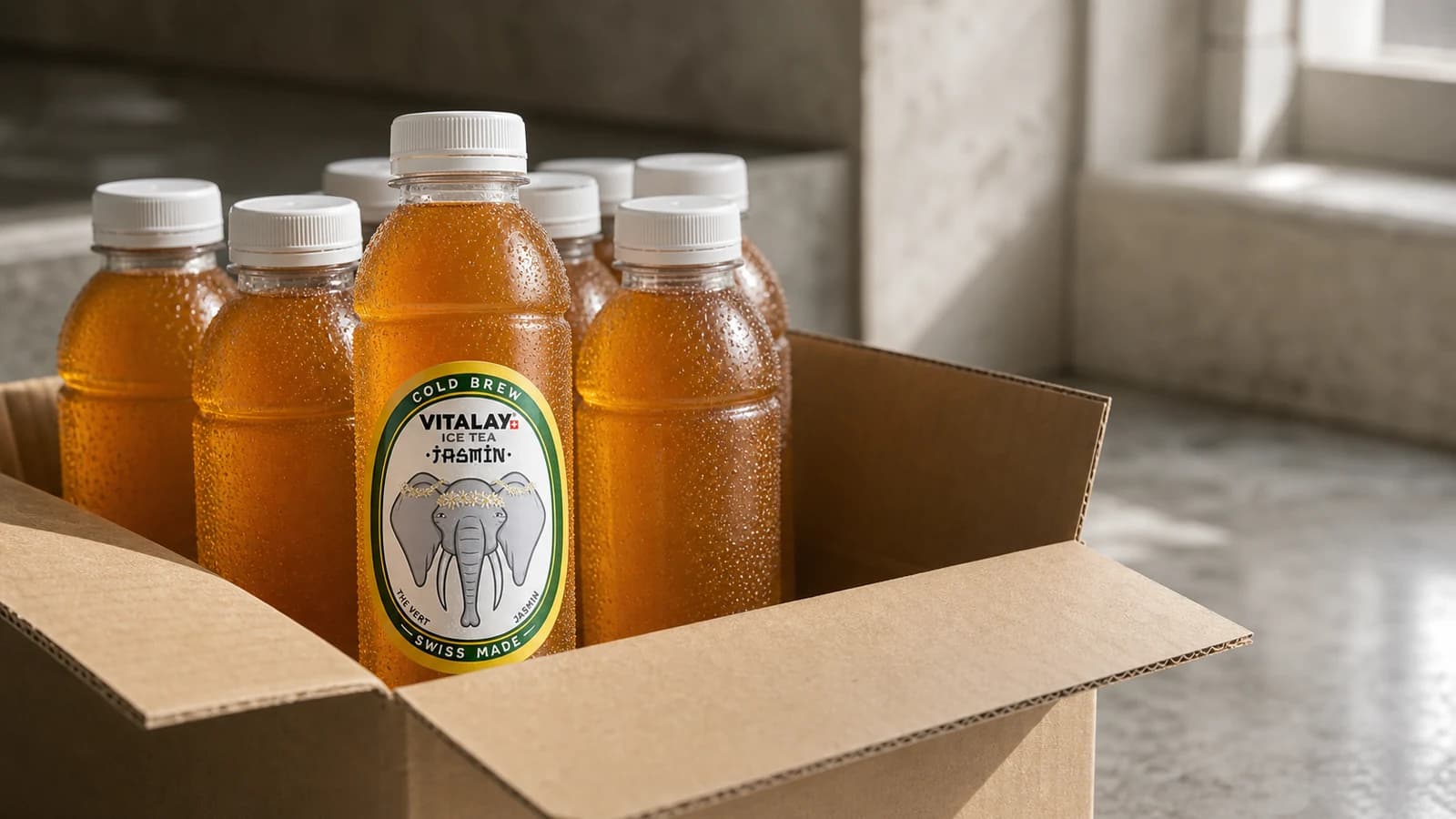
- Yes. Jasmine Iced Tea is available for B2B customers in cases of 16 bottles. It is part of our professional offer for restaurants, bars and hotels in French-speaking Switzerland. Terms and formats are detailed on our dedicated professional page.